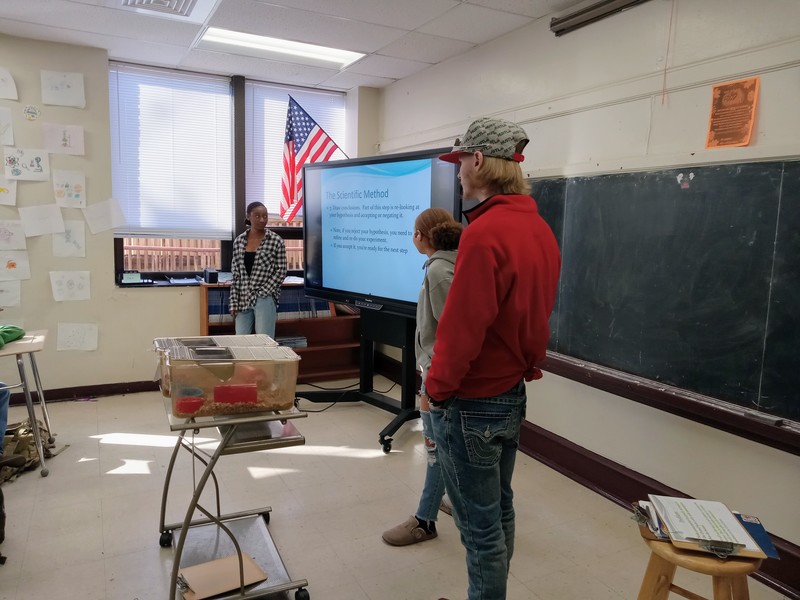
The River Ridge Learning Center is honored to have talented teachers with a variety of experiences. Science teacher, Matthew Rider, often calls on his experience as an Agriculture Teacher when it comes time for project based learning. When he heard of the Great Grow Along, he said, “This was my first time teaching general science at the high school level, so I needed something good.” Mr. Rider found that one of the most important lessons for his students, in every class, was their ability to understand and implement the scientific method. “The scientific method is a process that can be a part of every decision we make, and what better way to have the students learn it than to have them do it,” Mr. Rider explained, and the Great Grow Along guided the students through that method, and as they learned this, they also learned about responsibility, decision making, and collaboration.
The Great Grow Along (GGA) is an experiment supported by the Pennsylvania Society for Biomedical Research. It teaches students the scientific method, with an opportunity to participate in “real” science. The GGA introduces basic biomedical research, and explores the role nutrition plays in healthy growth. Over six weeks, students cared for four Sprague Dawley rats (Master Splinter, MiaMia [pronounced MyMy], Tink, and Katness Everdeen) and observed how different diets affected their development. Along the way, students learned how to set up experiments, collect and analyze data, and consider how studying animals can help us understand human health.
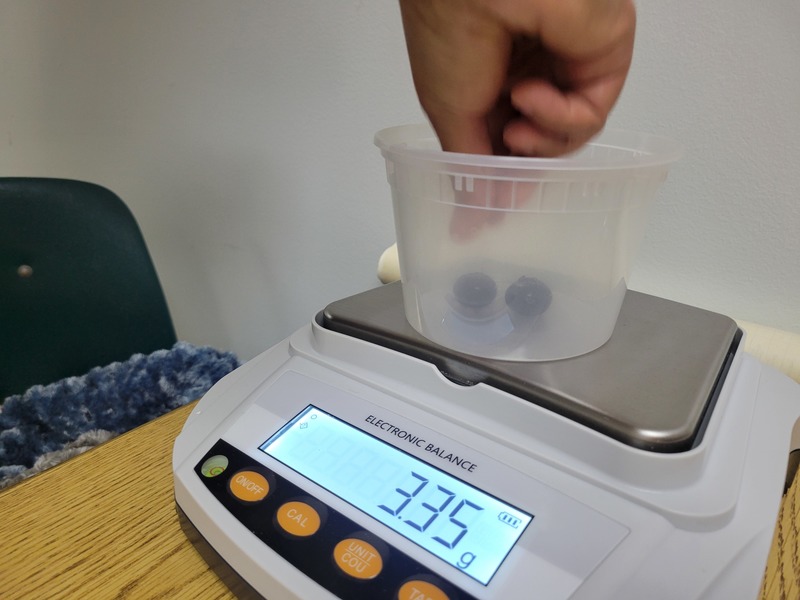
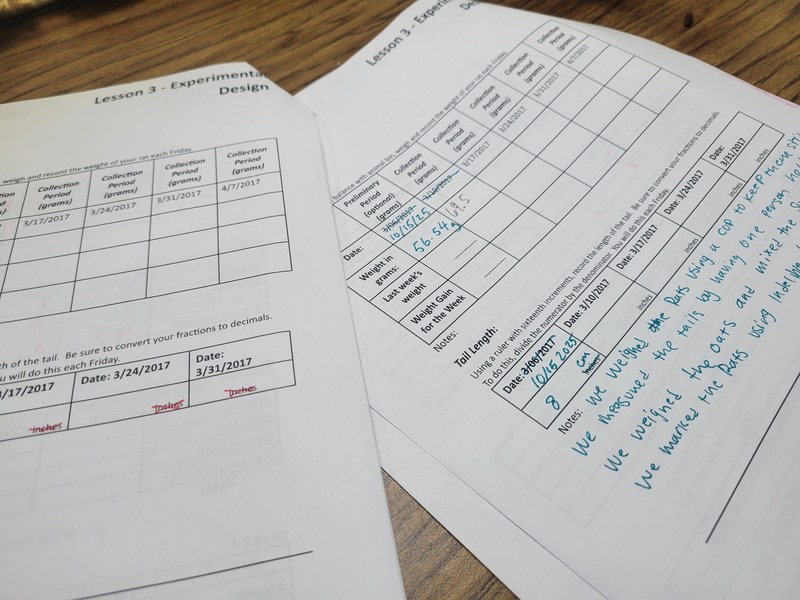
At first, students were skeptical. “They’re so dirty!” “Wait, they go to the bathroom on you? Gross!” “Their tails are disgusting!” were common refrains during early cage-cleaning days and measurement sessions. But over time, those reactions softened. Students began handling the rats carefully, completing their tasks without reminders, and even asking when they’d be allowed to interact with them again. By the end, the classroom had transformed into a space of curiosity, engagement, and hands-on learning.
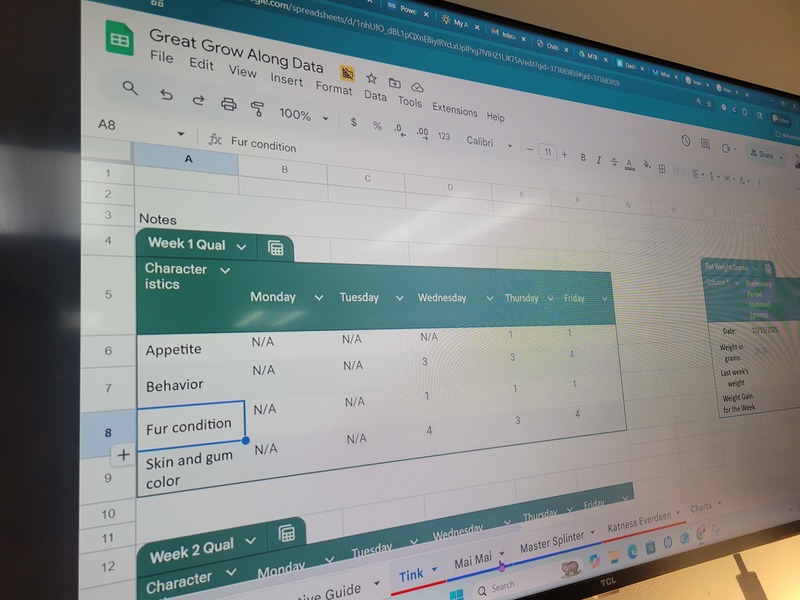
The science itself was fascinating. Students conducted controlled experiments, comparing sugar-water diets to milk, oats, fruits, vegetables, chicken, and a commercial pellet. They observed energy levels, sleep patterns, growth, fur quality, and even bone density. By Week 5, students were seeing clear results: the milk-fed rats grew healthier and more active, while the sugar-water rats showed poorer growth and less energy. But the real learning went beyond the data.
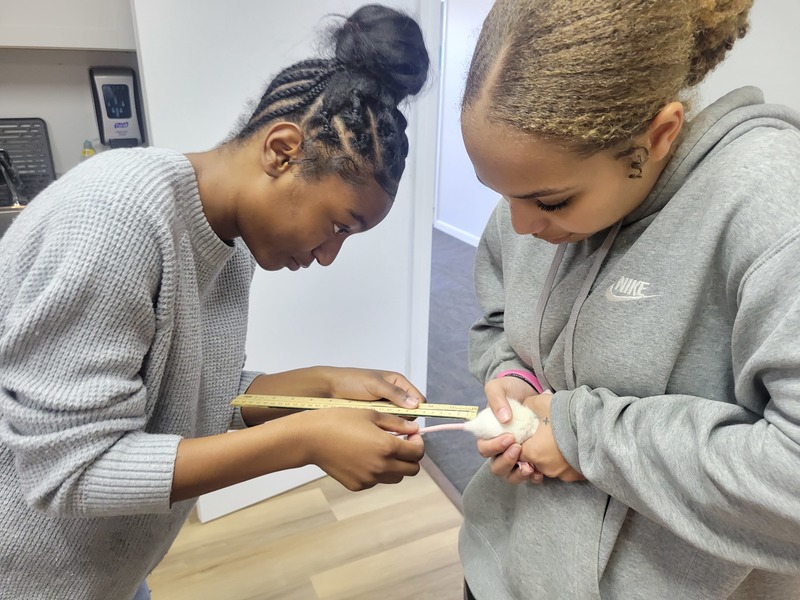
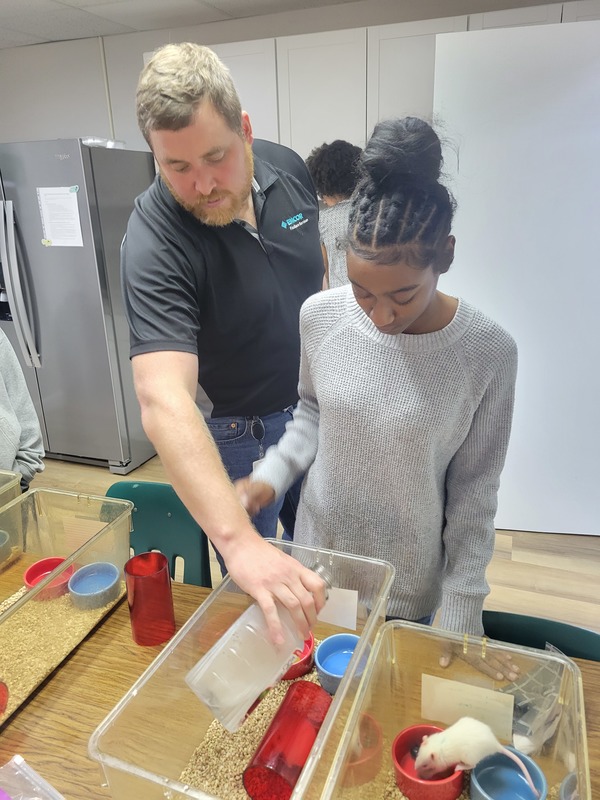
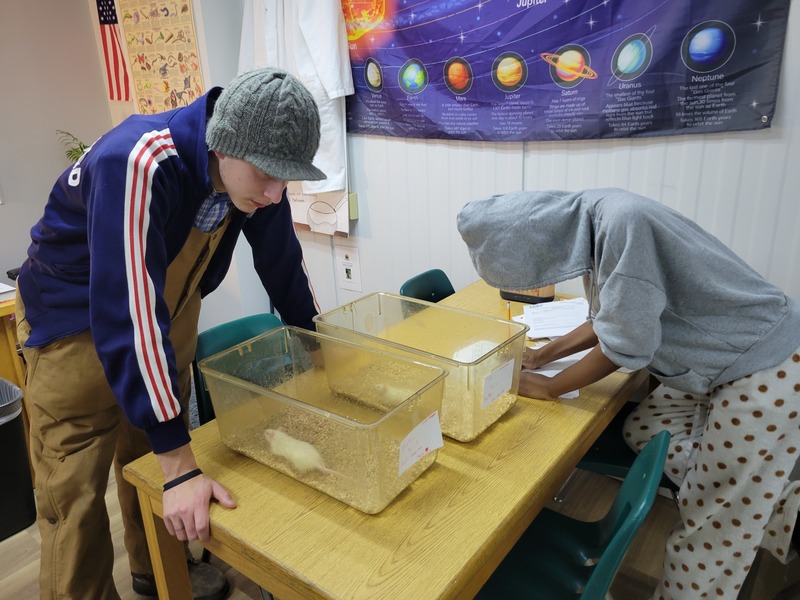
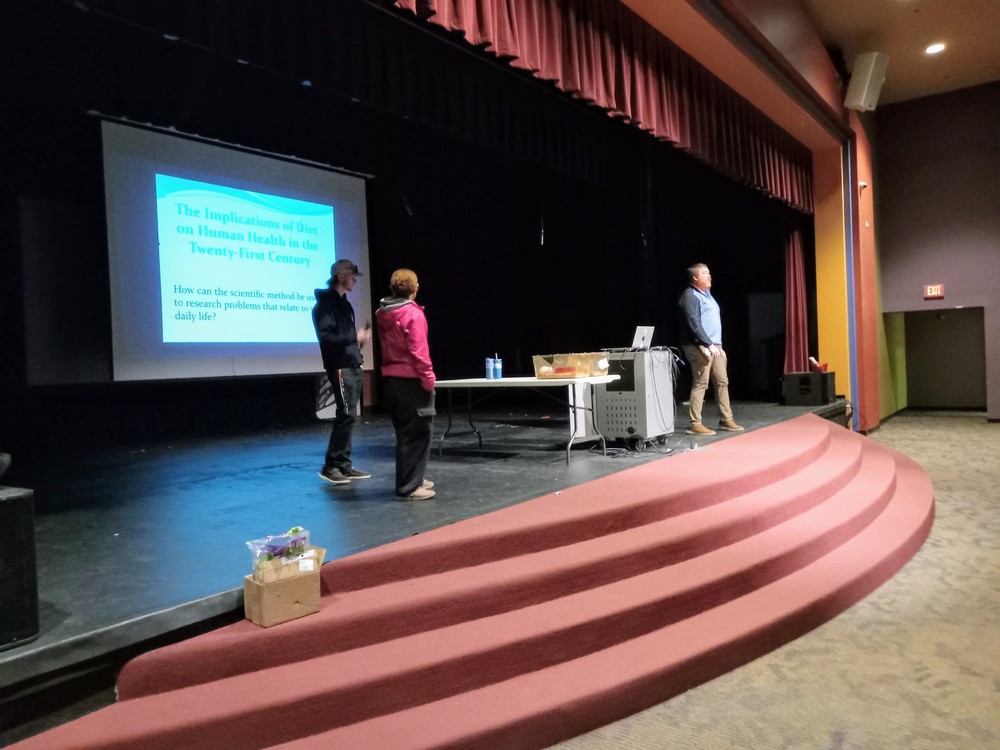
What made this experience unforgettable was watching students grow alongside their rats and alongside each other. They collaborated to care for the animals, plan experiments, record observations, and ultimately present their findings. Mrs. Leitmeyer stepped in to help develop communication and presentation skills, and when it came time to share the students' work with eighth grade science classes, students stepped up, divided responsibilities, created slideshows, practiced scripts, and encouraged each other to speak confidently and clearly.
By presentation day, the transformation was remarkable. Students spoke with poise and respect, answered questions with clarity, and supported one another when nerves kicked in. They demonstrated patience, collaboration, and genuine care, not just for their rats, but for each other. Watching them shine, confident and engaged, was a reminder of why we do what we do at River Ridge.
Experiences like The Great Grow Along are more than just science experiments. They connect learning to life beyond our classroom walls, build confidence, strengthen relationships, and give students opportunities to practice responsibility, empathy, and teamwork. And as always, seeing students rise to the challenge, and cheer each other on along the way, is the best part of all.